
Inverse Functions: Finding Inverse Functions Analytically
DEFINITION OF ONE-TO-ONE:
- Graph the function and apply the Horizontal Line Test to determine if the function is one-to-one and thus has an inverse function.
- Take the function equation and replace f(x) by y.
- Switch the x and the y in the function equation and solve for y.
- Replace y by f -1(x).
- Verify that f(x) and f -1(x) are inverse functions.
º Show that f[f -1(x)] = x.
º Show that the domain and range have been reversed.
Here is a review of the Horizontal Line Test.
HORIZONTAL LINE TEST:
A function f is one-to-one and has an inverse function if and only if no horizontal line intersects the graph of f at more than one point.
Let's use these guidelines to determine the inverse of a function.
|
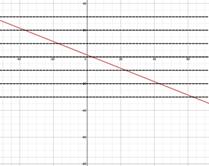
Step 1: Graph the function and apply the Horizontal Line Test to determine if the function is one-to-one and thus has an inverse function. No horizontal line intersects the graph in more than one place. Thus the function is one-to-one and has an inverse function. |
|
||||||||||||||||||||
|
Step 2: Take the function equation and replace f(x) by y. |
|
||||||||||||||||||||
|
Step 3: Switch the x and y in the function equation and solve for y. |
Original Switch x and y 2x = 3 - y Multiply by 2 y + 2x = 3 Add y y = 3 - 2x Subtract 2x |
||||||||||||||||||||
|
Step 4: Replace y by f -1(x). |
y = 3 - 2x f -1(x) = 3 - 2x |
||||||||||||||||||||
|
Step 5: Verify that f(x) and f -1(x) are inverse functions. 1. Show that f[f -1(x)] = x. 2. Show that f -1[f(x)] = x. 3. Show that the domain and range have been reversed. 1. 2. 3.
Verified, the inverse function of is |
|||||||||||||||||||||
|
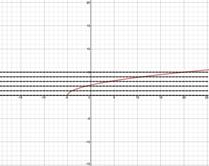
Step 1: Graph the function and apply the Horizontal Line Test to determine if the function is one-to-one and thus has an inverse function. No horizontal line intersects the graph in more than one place. Thus the function is one-to-one and has an inverse function. |
|
||||||||||||||||||||
|
Step 2: Take the function equation and replace f(x) by y. |
|
||||||||||||||||||||
|
Step 3: Switch the x and y in the function equation and solve for y. |
Original Switch x and y Square Subtract 5 |
||||||||||||||||||||
|
Step 4: Replace y by f -1(x). |
|
||||||||||||||||||||
|
Step 5: Verify that f(x) and f -1(x) are inverse functions. 4. Show that f[f -1(x)] = x. 5. Show that f -1[f(x)] = x. 6. Show that the domain and range have been reversed. 1. 2. 3.
Verified, the inverse function of is |
|||||||||||||||||||||
|
Related Links: Math algebra Conics: Classifying from General Equation Component Form and Magnitude Pre Calculus |
To link to this Inverse Functions: Finding Inverse Functions Analytically page, copy the following code to your site: